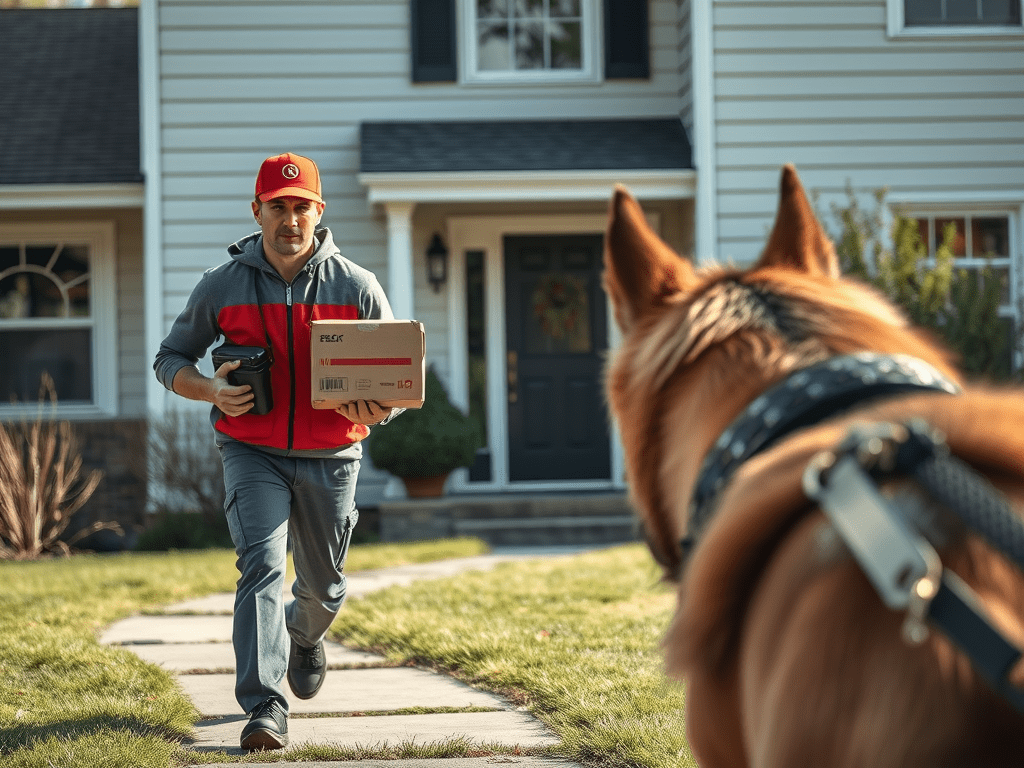
Delivery drivers face unique risks on the job, and encounters with aggressive dogs are among the most common—and dangerous. In 2024 alone, the U.S. Postal Service reported over 6,000 dog attacks on its employees, an increase from previous years. While USPS carriers bear much of the burden, drivers for Amazon, UPS, FedEx, and gig services like Instacart or DoorDash experience similar threats. These incidents can lead to serious injuries, medical bills, lost wages, stress, and even long-term disability.
This guide provides practical, expert-backed strategies to recognize, de-escalate, and protect yourself from aggressive dogs—while still completing your deliveries safely.
Why Dogs Become Aggressive Toward Delivery Drivers
Dogs don’t bite randomly. Common triggers include:
- Territorial or protective behavior: Viewing you as an intruder entering their “territory.”
- Fear-based aggression: Feeling threatened by a stranger approaching the home.
- Redirected or possessive aggression: Guarding food, toys, or family members.
- Pain or medical issues: Reactions due to injury or illness (e.g., rabies, though rare).
Even small or typically friendly breeds can bite—any dog can become aggressive under stress.

Recognizing the Signs: The Canine Ladder of Aggression
Dogs rarely attack without warning. They escalate through a series of signals, often called the “Ladder of Aggression” or “Ladder of Communication.” Recognizing these early allows you to back off before things worsen.
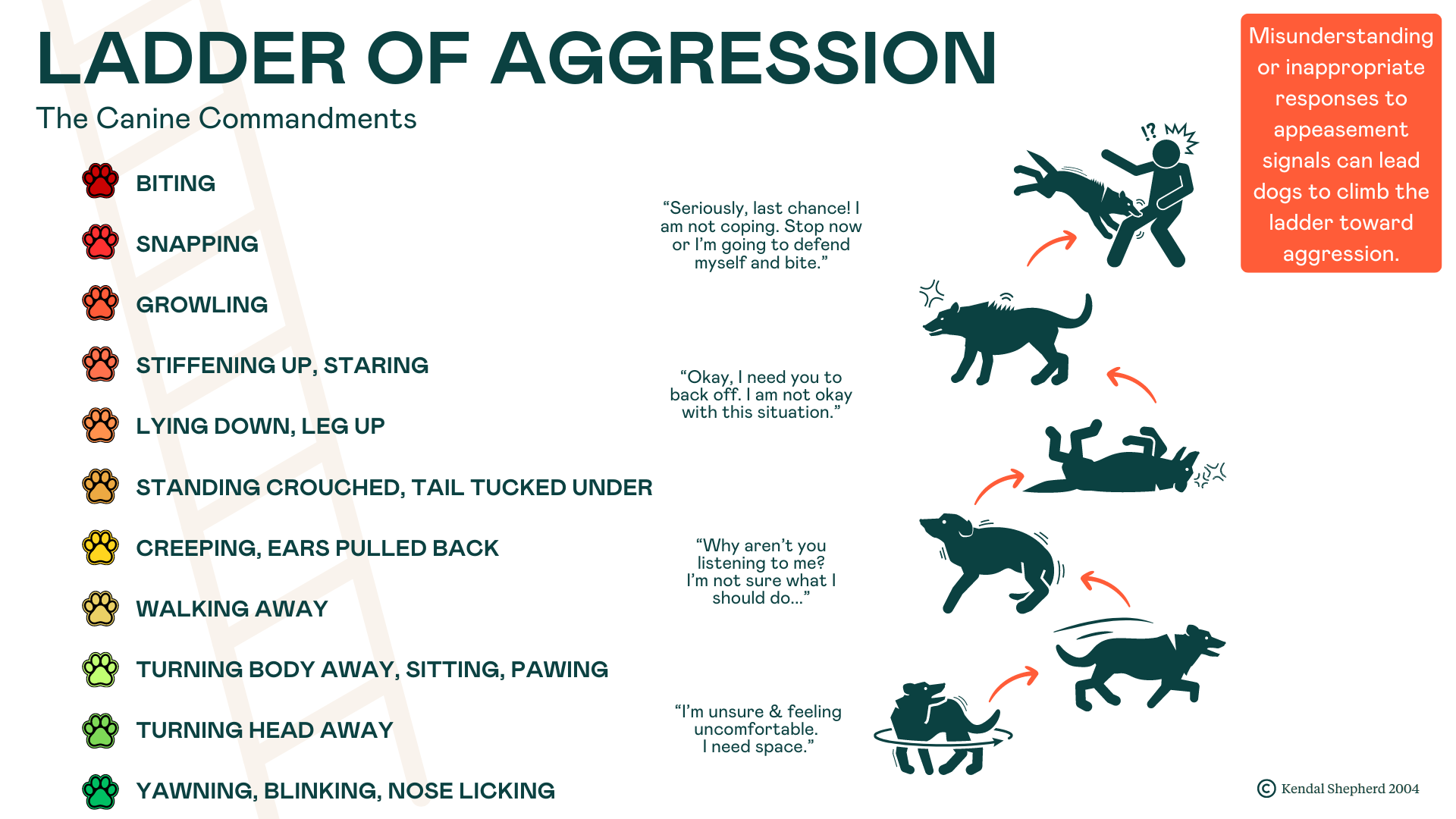
Early stress/fear signs (appeasement—dog trying to calm the situation):
- Yawning, lip licking, or excessive panting
- Turning head or body away
- Avoiding eye contact
- Flattened ears, crouched posture, or tucked tail
- Sudden freezing
Escalating aggression signs:
- Intense staring
- Raised hackles (fur on back)
- Stiff body, high tail
- Growling, snarling, or deep barking
- Lunging, snapping, or biting
Note on barking: Not all barking is aggressive—it can signal excitement, play, or alertness. Aggressive barks are typically low-pitched, rapid, and guttural.
:strip_icc()/top-causes-of-aggression-in-dogs-1117877_final-01-b96150820d0644d4ba7f82621dce43d5.png)
Look for visible warnings like “Beware of Dog” signs, bowls, or kennels before approaching.
Key Precautions on Your Route
- Never approach a loose dog. Back away slowly, facing it without direct eye contact.
- Don’t assume security. Gates, doors, leashes, or chains can fail—25% of fatal attacks involve chained dogs.
- Be cautious opening gates/doors. This could make you legally responsible if a confined dog escapes and attacks.
- Announce your presence. Make noise (e.g., call out) to avoid surprising a dog.
If safety is in doubt, skip the delivery. No package is worth your health—many companies (like USPS) allow this, requiring customers to pick up items instead.
How to De-Escalate and Protect Yourself
If faced with an aggressive dog:
- Stay calm and in control
- Do NOT run, shout, or wave arms—these can trigger chase instincts.
- Back away slowly, saying “No” or “Go home” firmly but quietly.
- Stand tall and confident, but non-threatening.
- Avoid eye contact
- A direct stare can be seen as a challenge. Look away or sideways.
- Claim your space
- Place a barrier (package, backpack, umbrella) between you and the dog.
- Distract if possible
- Carry dog treats to toss away (not directly at the dog).
- Throw a non-valuable item (e.g., water bottle) for diversion.
- Protect your body
- Keep arms close; cross them over your chest.
- Make fists if snapping occurs.
If attacked:
- Use your weight to pin the dog’s head/neck to the ground (mouth away from you).
- If bitten, push into the bite (to choke) rather than pull (to avoid tearing).
- Curl into a ball to protect vital areas.
- Seek help immediately—report to police/supervisor, document injuries, and get medical care.
Many drivers carry legal deterrents like ultrasonic devices or pepper spray (check company policy and local laws).
Tools to Stay Safer Long-Term
Apps like Routed Route Planner help by optimizing routes and letting you add custom notes to stops (e.g., “Aggressive dog—leave at gate”). This reminds you of hazards on repeat deliveries, saving time and reducing risk.
Prioritize your safety every day. With awareness and preparation, you can minimize dangers and focus on efficient, stress-free routes. Stay vigilant out there!

 routed
Leave a comment